Selecting Bearings for Vibrating & Shock-Load Equipment
Key Takeaways
- Vibrating equipment needs spherical or cylindrical roller bearings with high load capacity.
- C4 clearance compensates for thermal expansion from vibration-induced heat.
- Brass or steel cages are essential — nylon cages crack under vibration fatigue.
- Lubrication must handle high loads and frequent shock — use EP-grade grease.
The challenge of vibrating equipment
Vibrating screens, crushers, hammer mills and impact conveyors subject bearings to high, constantly reversing loads and frequent shock. The wrong bearing fails quickly from fatigue, cage fracture or lubrication breakdown. Getting the selection right is critical for uptime.
Bearing type selection
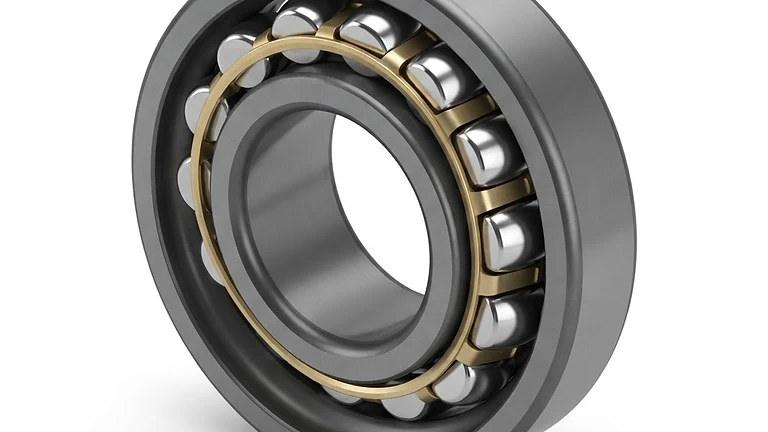
Spherical roller bearings
The primary choice for vibrating screens and heavy vibratory equipment. They handle:
- High radial and axial loads in both directions.
- Shaft misalignment — critical in vibrating equipment where the shaft deflects.
- Heavy shock loads — the barrel-shaped rollers distribute load well.
Use the 22200 or 23300 series with brass cages for vibrating screen applications.
Cylindrical roller bearings
For pure radial loads at high speed. They handle heavy radial loads but not axial loads, so they are typically used in pairs or with an angular contact bearing for axial location.
Tapered roller bearings
For combined radial and axial loads in crushers and gearboxes. Use in matched pairs for vibrating equipment to manage loads in both directions.
Clearance
Vibration generates heat from the constant load reversal. Use C4 clearance (greater than C3) to ensure the bearing does not run tight as it heats up. For very high-speed vibration, C5 may be needed.
Cage design
Brass or steel cages only. Nylon cages crack from vibration fatigue and are unsuitable for this service. Machined brass cages are preferred for heavy-duty vibrating equipment — they are stronger and more resistant to shock.
Lubrication
- Use EP (extreme pressure) grease — the shock loads require higher film strength.
- Frequent relubrication — vibration churns grease out of the bearing. Plan for relubrication intervals 2-3 times more frequent than normal.
- Oil bath lubrication — for very high-speed vibrating equipment, oil provides better cooling and lubrication than grease.
Common applications and recommendations
| Application | Recommended bearing | Key features | |---|---|---| | Vibrating screens | Spherical roller 22200/23300, C4 | Misalignment, shock, brass cage | | Jaw crushers | Spherical roller, heavy series | High shock, heavy load | | Hammer mills | Spherical or cylindrical, C4 | High speed + impact | | Impact conveyors | Spherical roller, sealed | Vibration + contamination |
Practical tips
- Mount with the correct interference fit — loose fits allow the bearing to creep on the shaft under vibration.
- Check housing bore wear regularly — vibration can fret the housing bore oversize.
- Monitor temperature — a sudden rise means the bearing is failing or running tight.
- Keep spares — vibrating equipment bearings fail without warning and are often not next-day available.
Recommended Bearing Types
Related Products in Stock


Frequently Asked Questions
What bearing is best for a vibrating screen?
Spherical roller bearings (22200 or 23300 series) with C4 clearance and brass cages are the standard choice for vibrating screens. They handle the combined radial and axial loads, shaft misalignment and shock that vibrating equipment produces.
Why do I need C4 clearance for vibrating equipment?
Vibration generates heat from constant load reversal. C4 clearance ensures the bearing maintains running clearance as it heats up, preventing the bearing from running tight and failing.
Can I use a nylon cage in a vibrating application?
No. Nylon cages crack from vibration fatigue. Use brass or steel cages for vibrating equipment — machined brass is preferred for heavy-duty applications as it is stronger and more shock-resistant.
Need help choosing a bearing?
Our engineers can identify the right part from a number, dimensions or a competitor reference.